Showing posts with label automobile future. Show all posts

Thursday, June 27, 2013

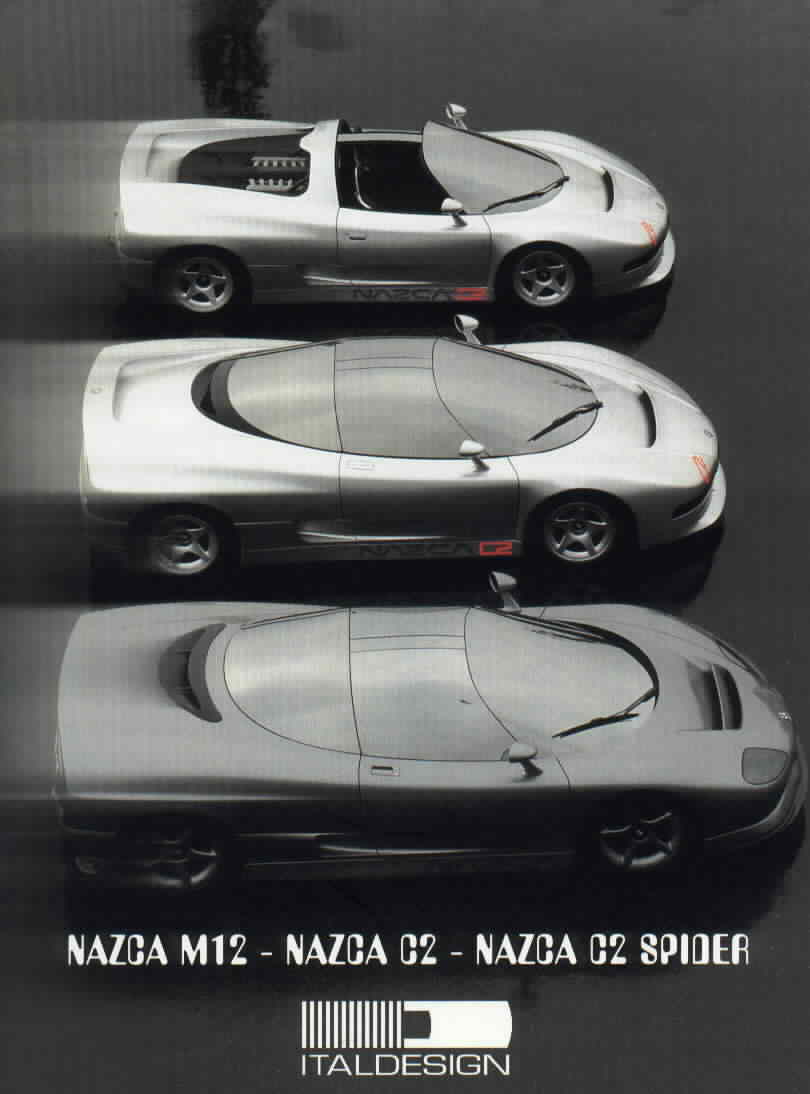
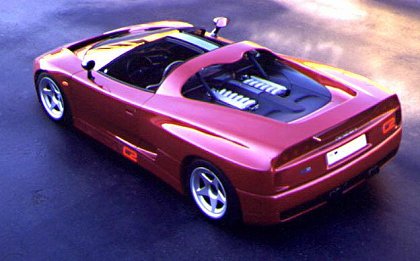
BMW Nazca C2

The BMW Nazca C2 (also known as Italdesign Nazca C2) was a 1991 conceptsports car. The car was designed by famed automotive engineering companyItaldesign, home of Giorgetto Giugiaro, and features a similar frontal design of aBMW. The car was equipped with the Neuromotion FC6 engine from BMW and produced 680 bhp (507 kW; 689 PS). The car had a top speed of 227 mph (365 km/h). Three cars in total were produced.

Mazda: Revamped 2014 Mazda 3 to lead compact segment in mpg

Mazda's next-generation Mazda3, equipped with its full set of technologies developed to reduce weight and enhance fuel efficiency, will top thecompact car segment in mpg when it goes on sale in the United States this fall, the automaker said today.

This fantastic car is made by mazda which launch in 2014 in united state.that very fast car and very buitiful.
have a latast light which create large beem of light in your benifit.
Every thing in this cr is very intrusting because of that this face is very enjoy full.

I waiting for your comment and like.

Suzuki Regina concept: the mini aero delight

Taht is a suzuki raina concept for mini car which is desing for high fuel eficeancy and a buitiful desing for impreess the customers.very cool desin with lower part is gray and middle is green and roof is whith. That amazing combination of colurs make very buitiful to the car.
The amazing light's of car like a alien group which set in middle green colour that make car more crazy and intrusting to drive. make happy jouny. keep visitin automobile largestate.

Wednesday, June 26, 2013

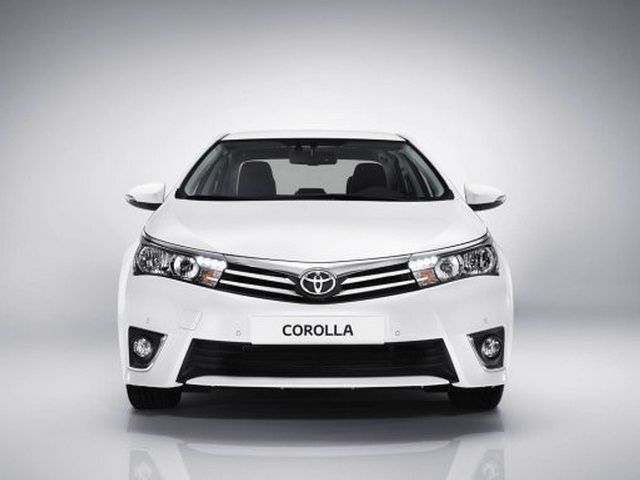
new look of toyota corolla.

European-spec 2014 Toyota Corolla
The Euro-spec Corolla actually shares a lot of its design with its larger platform-mate
Toyota finally dicide change face of toyota corolla in future. the old face of corolla is bored to people thats why toyota want to launch this model in us.
This face better then other car's of toyota car's . It's market-specific engines and specifications haven't been released yet.
Now we waiting this model and we will try to take test drive of this have many futures.
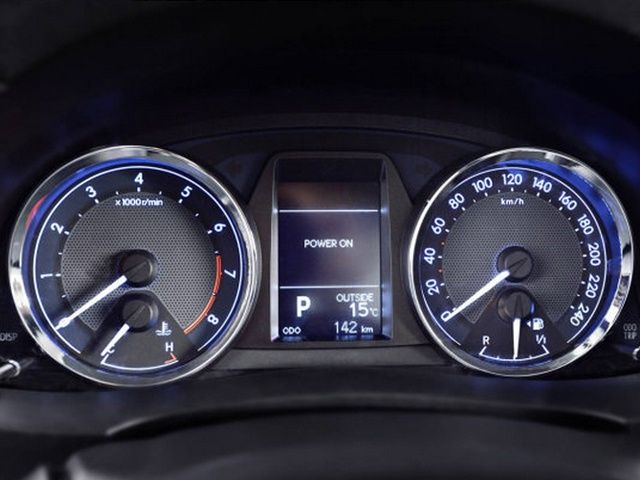
dashbord is awesome from old face of toyota corolla we will arrage lot's of thing in it's dash bord.
A good looking speedometer is awesome from other car's we clearly seen buitiful and romentic speedometer.


hybrid Racing car.

Toyota introduce TS030 Hybrid for street racing. this car is run on bettry which charged by our home electercity.
toyota try to run in racing now in 2013 toyota is sucsessful in this mission  now this car is run very fast and on electtercity. this test pre pration held in canada we can see this in blow pictures.

Monday, August 8, 2011

5 Facts About Chrysler Electric Vehicles


Chrysler electric minivan, yellow Dodge Chrysler electric sports car, white Chrysler Jeep Wrangler electric SUV
In the 1990s, Chrysler was right alongside domestic automakers Ford and GM with electric drive research and development. Chrysler was test marketing an electric minivan, proving out fast-charge technology for electric cars, and as seriously involved in this field as any company. The merger with Daimler (DaimlerChrysler) seriously slowed, if not stopped, full function electric drive development efforts in the Chrysler camp as emphasis was placed elsewhere.
1. Chrysler Was First
While plenty of others are discussed as leaders in the electric drive field, it was Chrysler that introduced the very first modern electric vehicle to market in the U.S. – the Chrysler TEVan in 1992. These were built in extremely limited numbers and aimed at fleets wishing early involvement with electric vehicles. Why fleets? Because of extremely high battery and component costs plus low volume production, the vehicle’s price was in the range of $100,000 each … so nobody else could afford them.
2. EPIC Concept Electric Vehicle
Chrysler developed a smooth-looking electric concept van in 1992 called the Electric Power Inter-Urban Commuter, or EPIC for short. Strange acronyms like that seemed to be almost normal then (as evidenced by the circa-1990s Subaru BRAT – Bi-drive Recreational All-terrain Transporter). The EPIC concept was energized by nickel-iron batteries, although that changed to advanced lead-acid batteries in the limited production version of the EPIC that was marketed to fleets five years later.
Chrysler's Electric Power Inter-Urban Commuter
3. ‘Destiny’ Program’s Four-Door Electric
Modifying existing platforms to accept electric drive was not the exclusive approach at Chrysler, Early on, the automaker strived to create a viable four-door mid-size electric vehicle through its ‘Destiny’ program. The vehicle in development made use of lightweight materials and an AC induction motor. Ultimately, it was determined that this would not prove to be a viable option and other approaches were followed.
4. GEM Neighborhood Electric Vehicle
Chrysler has sold more than 35,000 low-speed GEM neighborhood electric vehicles worldwide since the mid-1990s with more than 200 million zero-emission miles driven by customers. The GEM is suited for certain types of uses and is not a full-function vehicle. As a neighborhood electric vehicle, by law it is governed to a top speed of 25 mph and is allowed on streets with posted limits of 35 mph or less.
5. Renewed Electric Car Efforts
No longer part of DaimlerChrysler, efforts to develop and market electric cars have returned at Chrysler. The most high-profile example of this was the recent debut of three electric drive vehicle concepts – an all-electric Dodge sports car and range-extended electric versions of the Jeep Wrangler and Chrysler Town & Country minivan. The concepts use lithium-ion batteries. While no information is provided about sourcing of these vehicles’ high-tech components, photos have shown the use of UQM Technologies electric drive in the Dodge sports car concept. Chrysler does say that its efforts will move beyond the concept stage and the company will market one of these three vehicles beginning in 2010.
Lithium-ion battery

BMW to Introduce Carbon Fiber Electric Car to Market in 2013


If you’ve been wondering where BMW’s ‘Project i’ field study program is headed, the wait is over. BMW has now announced its intention to produce a radically different urban electric car in 2013, a departure from the more conventional MINI E and 1-Series ActiveE battery electrics this automaker has focused on in recent years. BMW’s four-passenger premium city car is dubbed the ‘Megacity Vehicle.’
Megacity is a term used to describe the largest population centers on earth. In these busy, crowded environments, many traditional vehicles are too large or simply too inefficient. The Megacity Vehicle is a purpose-built urban transport that’s designed and engineered from the pavement up for its intended mission. A pure EV, the Megacity Vehicle is actually the latest in a long history of electric drive vehicles from BMW. Forty years ago, BMW produced a small fleet of bright orange electric 1602 sedans to serve as marathon support cars for the 1972 Munich Olympic Games. Electric drive development continued over the next four decades with several notable concepts, then shifted into high gear with the current Project i program that launched in 2007.
The Megacity vehicle will break new ground on several fronts, not the least of which is body structure. While most lightweight cars tend to use unibody construction, the futuristic BMW will be body-on-frame. But this body-on-frame design is very unique, featuring an all-aluminum frame to carry the suspension, battery, and electric motor that will be mated to a carbon fiber body structure.
BMW’s design places the large lithium-ion battery pack mid-ship between the frame rails to maintain a low center of gravity. This location also protects the pack of 96 4-volt cells, which are wired in series and encased in an aluminum housing. Battery cells are from German supplier SB LiMotive. The rear frame section is a large cast aluminum structure that serves as a mount for the Megacity Vehicle’s 134 hp (100-kW) brushless electric traction motor. The rear-drive layout was in part chosen to maintain BMW’s legendary driving dynamics.
At half the weight of a steel body and 30 percent lighter than aluminum, the carbon fiber body is truly space-age construction. BMW has developed proprietary manufacturing techniques to make all the pieces come together and will produce the carbon fiber material through a joint venture with SGL Automotive Carbon Fibers at a new facility in Moses Lake, Washington. Besides being lighter, carbon fiber is also corrosion resistant and five times stronger than steel. We witnessed the results of initial crash tests of the body and frame structure while in Germany, and came away thinking it’s no wonder they make Formula 1 race cars out of carbon fiber. Simply, impact absorption and damping are impressive.
We will bring you more details on BMW’s ‘premium, clever, and clean’ Megacity Vehicle as this program progresses.

Lotus Evora 414E Hybrid Offers Economy and Performance, Too


Enthusiasts worry that without combustion engines, cars will not be as much fun to drive. The Lotus Evora 414E Hybrid Concept, based on the same versatile platform as the conventional Evora model, was developed to demonstrate that electric and hybrid sports cars can have the feel, driving dynamics, feedback, and even the sounds of a high-performance sports car.
There are reasons for the Lotus Evora 414E Hybrid Concept’s unusual name and copper color scheme. The name comes from the 414 PS – ‘PS’ forPferdestärke, horsepower in German – power rating. Copper, a color associated with electrical systems, was chosen for the car’s interior and exterior.
Two electric motors independently drive each rear wheel via a single-speed transmission integrated into a common housing. Each motor provides 204 horsepower (207 PS) and 295 pound-feet of torque to each wheel. Well suited to electric and series hybrid vehicles, varying torque at each driving wheel allows torque vectoring for enhanced performance. Besides enhancing low speed maneuverability and parking ease, torque steering improves high-speed, straight-line travel. With lateral sensors, it offers stability control and steering response normally available only from heavy and expensive rear steer systems that automatically correct both understeer and oversteer.
A 17 kilowatt-hour lithium polymer battery pack is located in the vehicle’s center for battery-only driving range of up to 35 miles. For longer trips, a Lotus Range Extender engine drives a generator to supply the motors and recharge the battery. This 48 horsepower, 1.2 liter three-cylinder engine is optimized specifically for this series hybrid and can be operated on gasoline and alcohol-based fuels, providing a total range of over 300 miles.
The aluminum monoblock engine, with its single casting for cylinder head and exhaust manifold, means reduced weight, assembly cost, and package size as well as improved emissions and engine durability. The integrated generator is also used as a motor to start the range extender engine. This hybrid sports car can accelerate from 0-60 mph in under 4 seconds
While only having a single speed, the driver experiences a simulated 7-speed paddle, quick-shift gear change with a dual clutch transmission. You hear synthesized engine sounds that change in frequency with virtual gear selection and even feel the jolt of the gear change. The simulated gear change can be switched off for more relaxed driving.
Like most EVs and HEVs, the Evora 414E Hybrid has regenerative braking, although in this case a more sophisticated variation. A driver controls deceleration with simulated engine braking through a virtual downshift in gears. Unlike other regenerative braking systems, the driver can select the appropriate level of regeneration by simulating stepping down one, two, or even three gears. Both the simulated gear change noise and retardation is similar to that of a conventional gearbox.
Not only does the Evora 414E Hybrid drive like a conventional sports car, it also sounds like one with driver selectable sounds that include those of V-6 to V-12 engines. Developed with Harman International, the HALOsonic Internal and External Electronic Sound Synthesis system produces engine sounds inside through the audio system. It also generates sounds outside the vehicle through speakers mounted at the front and rear, thus serving as an audible warning to pedestrians, especially at slower speeds when it may be difficult to hear a vehicle running on electric motors.

Volkswagen NCC Shares Vision of a Future Compact Hybrid


VW’s NCC (New Compact Coupe) Hybrid makes a statement with its elegant profile accented by an aggressive front end, low and wide stance, and 19-inch wheels. It also casts an eye toward the future with an innovative use of the automaker’s advanced TSI gasoline engine technology combined with electric drive.
The NCC’s 1.4-liter TSI turbocharged and intercooled gas engine provides 150 horsepower and 177 lb-ft. of torque on its own, with the electric motor contributing an additional 27 hp and instant torque. This brings brisk 0-60 acceleration in 8.1 seconds with a top speed of 141 mph.
The sleek coupe is designed to operate exclusively on electric power at times and also add boost to the engine during acceleration. Drag losses are minimized by decoupling the TSI engine from the drivetrain while operating on electric power and also while coasting.
Power is directed through a seven-speed Direct Shift Gearbox. Regenerative braking is integrated to allow power to be routed back to the car’s lithium-ion batteries during deceleration and braking. All this brings a combined fuel economy rating of 45 mpg, according to Volkswagen.
Volkswagen’s NCC provides a glimpse of what this automaker has in mind for a future compact hybrid model. While clean diesels are the primary emphasis in VW’s approach to higher efficiency at present, change is afoot as the automaker is working to add more diverse hybrid and electric powered vehicles to its portfolio.

AMP Equinox a Functional and Stylish Electric Vehicle Option


If you want a family-sized battery electric vehicle you don’t want to wait until the Nissan Leaf or Mitsubishi i-MiEV are available, there’s a new option. AMP Electric Vehicles is now taking orders for its AMP’d Equinox with first deliveries planned for June 2010. Of course, you have to purchase a Chevrolet Equinox Crossover and deliver it to AMP’s conversion facility in Blue Ash, Ohio. Two weeks later, though, you’ll have a completed conversion that finds your new ride making the leap from gasoline to zero emission electric power.
For several years now, AMP has been converting GM Saturn Sky and Pontiac Solstice sports cars into electric vehicles. Now that both of these two-seat roadsters are no longer in production, AMP is refocusing its attention on conversions of the highly regarded 2010 Chevrolet Equinox. The company still converts 2007-2009 Saturn Sky and Pontiac Solstice models, plus it also plans conversions of other GM vehicles.
The AMP conversion replaces the rear axle with an integrated electric power unit driving the rear wheels. Power comes from two HVH250 Remy International electric motor/generators mounted back-to-back with each motor driving one rear wheel. Thus, the differential and transmission are no longer needed. The result is very powerful system that is very light, inexpensive, and relatively straightforward.
The off-the-shelf HVH250 motor is used in other high-profile applications including General Motors, Mercedes-Benz, and BMW two-mode hybrids. AMP adds its own motor housing and interface components to fit the needs of the specific vehicle being converted to electric power. The HVH250 motors use Remy’s High Voltage Hairpin (HVH) technology that features bar wound stators rather than wire winding, bringing what the company claims is dramatically improved motor performance and cooling effectiveness.
The AMP'd Equinox has a top speed of 90 mph and achieves 0 to 60 mph acceleration in about eight seconds. Because of the motor’s high efficiency, AMP says the electrified Equinox can travel up to 150 miles on a single charge of its 37 kWh lithium iron phosphate batteries – about 50 miles more than the Nissan Leaf. Plus, individual cells can be replaced on an as-needed basis without replacing the entire battery pack. AMP expects the battery packs to retain 80 percent of their capacity up to 100,000 miles.
The cost of the conversion with government incentives is $25,000 plus the price of a new Chevy Equinox. Thus, depending on amenities ordered, the total price of this highly functional electric crossover should come in about $50,000.

Art Center Summit: Innovation & Design Can Influence Change


Aptera Three-Wheeled Electric Car
Art Center College of Design has historically provided the worldwide auto industry with more designers than any other institution. Graduates from this Southern California college have literally influenced the style and functionality of modern vehicles and will certainly continue to do so. Green Car editors have been to Art Center’s two Pasadena campuses – both located near Los Angeles – and have found the creativity there to be evident in many forms, from transportation, environmental, entertainment, product, and graphic design to film, fine art, illustration, and photography and imaging.
Not content with playing a passive role, Art Center has in recent years devoted time and energy to its vision that transportation can and must become sustainable. Tangible evidence of this commitment is the recent third annual Art Center Summit, Expanding the Vision of Sustainable Mobility, which continued this institution’s ongoing dialogue on the future of sustainable transportation.
Featuring 55 speakers and attendees from 16 countries, the Art Center Summit focused on an array of subjects topical to today’s imperatives. These included presentations and discussions on energy, mobility habits, visions for dynamic cities, and the future of flight. Policy-changing strategies and sustainability advances in other industries such as health care were also part of the agenda.
Volkswagen W1 electric car model
“When you have a good idea and you want to change the world, you want to start hanging out with people a lot smarter than you,” commented John Waters, President and CEO of Bright Automotive, in his Summit presentation. Clearly, the Art Center Summit was the place for attendees and presenters to do this since the collective brain trust on hand was impressive.
Among the 55 speakers were R. James Woolsey, Venture Partner at VantagePoint Venture Partners and Former Director of the CIA; Andy Karsner, former Assistant Secretary for Energy Efficiency and Renewable Energy at the Department of Energy; Amory Lovins, Chairman and Chief Scientist at Rocky Mountain Institute; Bill Reinert, National Manager for Advanced Vehicle Technology at Toyota Motor Sales USA; Bryan Nesbitt, Vice President of Design at General Motors North America; and many others.
In his keynote address, Woolsey warned of the consequences of not shifting quickly away from oil dependence, sharing that “not only is three-quarters of the world’s oil in the hands of the Middle East and Russia,” but that “Al Qaeda has tried to go after it twice.” Karsner shared the need for new voices in Washington – including design – to bring about significant change. Lovins underscored the need for lightweighting vehicles to achieve greater efficiency. In a videotaped presentation, Rep. Ed Markey, Chairman of the House Select Committee on Energy Independence and Global Warming, called for designers to become involved in developing a new strategy for mobility in the United States.
Art Center Summit's Executive Director, David Muyres
As the Art Center Summit's Executive Director, David Muyres, describes the mission, “It is not all about science, technology, and policy. People and consumers can play a big role in how fast the market moves towards new environmentally friendly ways of how we move around the planet. Design can help craft new exciting methods of transportation that are more sexy and desirable than what people use today. By making these new options more exciting and desirable the rate of change will be that much faster. And in today’s economic climate, everyone wins.”
Art Center has been an integral part of automotive design over its 78 year history. Even so, its staff point out that the country’s transportation system is far too dependent on cars and more options are needed. While automobiles are the primary method of getting around in the U.S., Art Center points out that it’s only the 5th or 6th most popular option in Europe and Asia where other options are readily accessible. The result is consumers who own fewer cars and have the flexibility to commute in more environmentally compatible ways.
Is there change afoot? Absolutely, and it’s apparent that Art Center College of Design aims to be a part of it.
“Designers want to address problems and go make stuff,” says Lloyd Walker, Adjunct Professor at Art Center and Principal of Precurve LLC. “So in 2007, when we heard that the automobile industry was on the verge of incredible disruptive change, we asked, ‘how can Art Center help?’” The ongoing Art Center Summit series is tangible proof of how that question is being answered.
Art Center Summit logo

Kia Ray EcoDynamics Plug-In Hybrid Based on Forte Platform


To say that Kia has come along as a brand would be an understatement. This marque, known for its inexpensive entry point in the market, offers a corporate tagline that reads ‘The Power to Surprise.’ Well, no kidding. Its mainstream offerings like the Sorrento and Sportage crossovers, Borrego SUV, and Optima sedan – not to mention the stylishly fluid Forte Koup and trendy Soul – show there’s a play here to capture a larger part of the market. Should we be surprised, then, that there’s also a serious effort to play in the big leagues of advanced technology vehicles?
The Kia Ray concept is but one bit of insight into the automaker’s future plans. The fifth vehicle in the past year to emerge from the California-based Kia Design Center America (KDCA), the Ray is part of Kia’s ‘EcoDynamics’ sub-brand that aims to embrace more fuel efficient and low emission technologies in future vehicles. Other EcoDynamics examples include the Kia Borrego FCEV (fuel cell electric vehicle), Forte LPI Hybrid, cee’d Hybrid, and twin-turbo diesel Kia Sorento Hybrid.
Based on the Kia Forte platform, the Ray plug-in hybrid is a futuristically-styled, four-door compact sedan featuring flush surfaces, an integrated underbody pan, and an array of automated design elements that react to real-time conditions to decrease wind resistance. Among these are a sliding deck-lid that extends from the rear at higher speeds and front driving lamps that slide back to create openings for air intake. Various eco features are integrated including lightweight and materials and a glass roof panel with hexagonal solar cells.
This front-drive PHEV is designed to be powered by a 1.4-liter, 153 hp gasoline direct injected engine and a 78 kW electric motor energized by lithium-ion batteries. Power is directed through a continuously variable transmission, with the vehicle driven exclusively by the electric motor for up to 50 miles, by the gas engine, or by both powerplants for an overall driving range of over 740 miles.

Audi e-gas Project Combines Hydrogen and CO2


One of the disadvantages of renewable energy sources like wind and solar is the difficulty in managing their fluctuating electrical output to coincide with power demand. Audi's e-gas project has a solution. Excess electrical power would be used to produce hydrogen by electrolysis and e-gas –synthetic methane – by the methanation of hydrogen.
This would provide hydrogen for fuel cell vehicles, e-gas for natural gas vehicles, and electricity for electric models. It would also allow storage of excess electrical capacity, when converted to e-gas, in the largest available energy-storage system: the natural gas network.
Audi is building an e-gas plant consisting of two main elements, an electrolyzer and a methanation unit The electrolyzer running on green electricity uses polymer electrolyte membranes to split water into hydrogen and oxygen. Since there are still few fuel cell vehicles, initially the hydrogen will be used by the methanation unit. Here, hydrogen is combined with carbon dioxide to create e-gas. Methanation uses CO2 rather than discharging it into the atmosphere. Although e-gas is really synthetic natural gas or methane, Audi calls it e-gas.
After three years of research, Audi is now entering the practical phase. In January 2011, a lab facility with an output of 25 kilowatts was set up for testing purposes. In mid-2011, Audi and several partners will invest several tens of millions of euros to begin construction of an e-gas facility in Werlte, Germany. The Audi e-gas project can easily be replicated in any country with an existing natural-gas network.
Starting in 2013, Audi will begin series production of the Audi A3 TCNG with an engine using Audi's TFSI technology that can operate on e-gas, CNG, or conventional gasoline when neither alternative fuel is available.
Audi is also contributing to the construction of offshore North Sea wind turbines. During the project’s first phase, four large powerplants at an offshore wind park in the North Sea are being financed by Audi and a regional power supply company. Rated at 3.6 megawatts each, these four turbines can supply some 53 gigawatt-hours of electricity annually.

2012 Honda Civic a Model of Efficiency and Innovation


Ever since the first Honda Civic appeared in 1972, this top selling model has earned a reputation for economical, reliable driving and technical innovation. For example, in 1975 the first generation Civic featured Compound Vortex Controlled Combustion (CVCC) technology that allowed Honda to meet the increasingly stringent emission standards of the day without a catalytic converter.
Honda’s redesigned, ninth generation 2012 Civic continues this innovative tradition with improved fuel economy, alternative fuel and hybrid variants, and an array of high-tech features. They are powered by a choice of engines featuring Variable Valve Timing and Lift Electronic Control (i-VTEC) technology. For the first time, the natural gas Civic GX variant – the only OEM-built, dedicated CNG passenger sedan built in the U.S. – is being sold nationwide. The Civic GX was previously marketed only in California, New York, Utah, and Oklahoma.
Most 2012 Civic models have Honda Eco Assist technology, already available in the Honda CR-Z and Insight hybrids. This is the first application of Eco Assist in gasoline-only powered cars. EcoAssist is a real-time feedback system designed to help drivers develop efficient driving habits When a green ECON button is pressed, the system controls certain vehicle functions to maximize fuel economy.
The Civic Hybrid uses the latest generation Integrated Motor Assist (IMA) gasoline-electric hybrid system. The big change here is that previous iterations used nickel-metal-hybrid (NiMH) batteries while the new one is powered by lithium-ion (Li-ion) battery technology, a first for Honda.
Honda has also shown its next-generation plug-in hybrid platform concept featuring a two-motor hybrid system. This system can operate in three modes – all-electric, gasoline-electric hybrid, and a unique engine direct-drive mode. In the concept’s all-electric mode, the vehicle is powered by a 6 kilowatt-hour lithium-ion battery and 120 kilowatt electric motor to provide an all-electric range of 10 to 15 miles and a top speed of 62 mph. A 2.0-liter, i-VTEC four-cylinder, Atkinson cycle engine mated to an electric continuously variable transmission (E-CVT) is paired with the electric motor for the hybrid mode. The gasoline engine alone drives the front wheels for efficient high-speed, long-distance cruising in the direct-drive mode.